
An ETRM is the system that holds together the deals, position, value and risk of an energy portfolio. In this guide we look at what it does process by process, why TIDE has changed its requirements and how to evaluate ETRM software before choosing it.
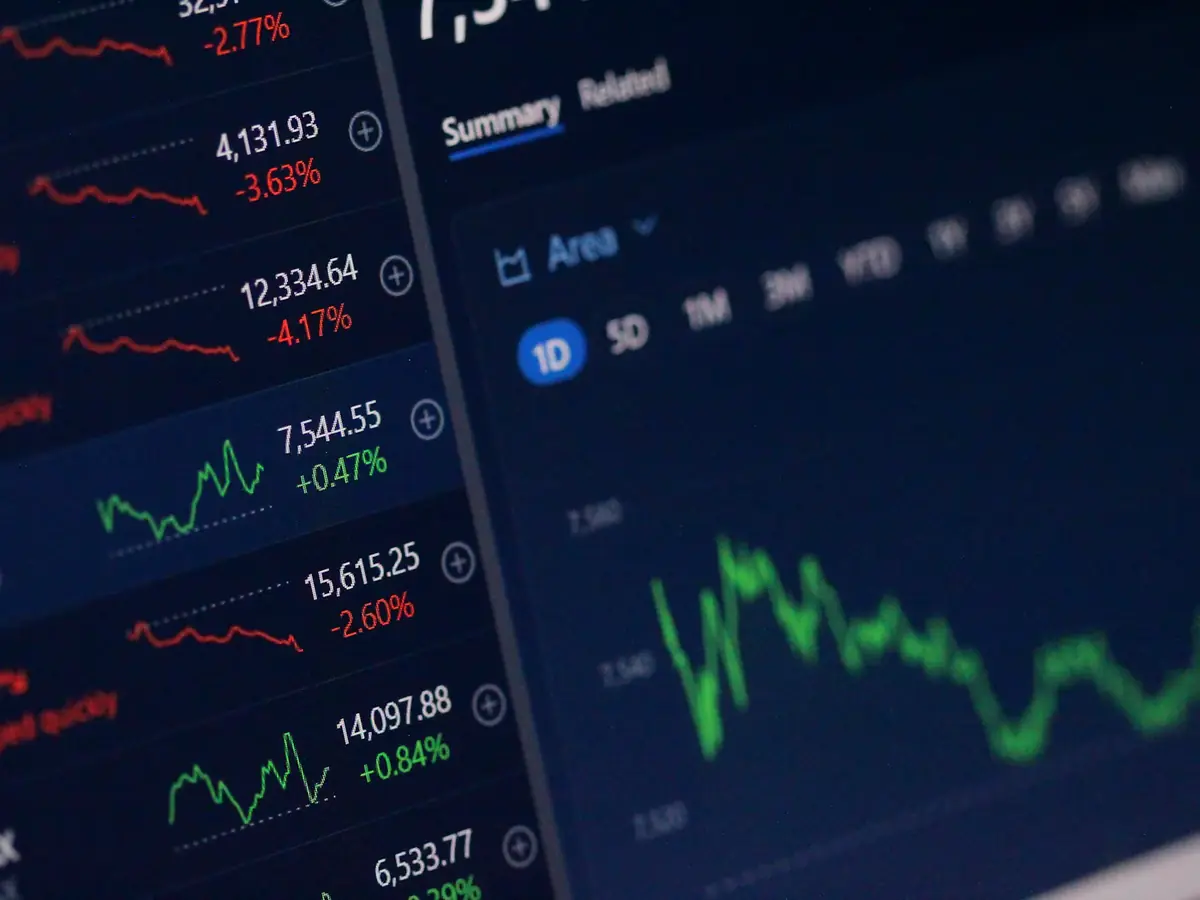
An ETRM (Energy Trading and Risk Management) system is the software that records energy purchase and sale contracts, calculates their position and market value and measures portfolio risk. It is the tool shared by front, middle and back office: the trader sees their exposure, the risk manager the limits, the back office the flows to settle, all starting from the same deals.
What energy trading and risk management means
Anyone who buys and sells power or gas takes on commitments every day on future quantities and prices: bilateral deals with counterparties, forward products on exchanges, contracts with end customers, PPAs with producers. The value of these commitments changes with the market, and so does the risk. Energy trading and risk management is the discipline that keeps all of this under control; the ETRM is the system that makes it workable, replacing spreadsheets and manual reconciliations with a single historicised database.
What an ETRM does, process by process
Functions vary from product to product, but the core is always the same:
- Deal capture. Every contract enters the portfolio with its terms: commodity, profile, fixed or indexed price, counterparty, duration.
- Market data and forward curves. Quotations and spot prices come from exchanges and data providers; from these the forward curve used to value the portfolio is built.
- Position and exposure. For each underlying, the ETRM calculates how much is bought, how much is sold and how much remains open, including hedges on indexed contracts.
- Mark-to-market and risk. The portfolio is revalued on the latest curve; metrics such as Value at Risk, Profit at Risk, stress tests and sensitivity measure how much could be lost and where.
- Settlement and compliance. Deals become transactions to settle and reports to the trade repositories required by EMIR and REMIT.
The value lies not in the individual functions but in the fact that they work on the same data: a deal entered once feeds position, valuation, risk and back office, with no double entry.
Why a spreadsheet is no longer enough
While the portfolio is small, a set of files can cope. As deals, counterparties and products grow, the limits emerge: different versions of the same data, curves that are not historicised, calculations that cannot be reconstructed afterwards, long delays in closing the position at the end of the day. An ETRM keeps curves, scenarios and valuations, so every figure can be reconstructed and checked, including at audit.
ETRM and TIDE: what changes on the Italian power market
Since 1 January 2025 the Integrated Electricity Dispatching Code (TIDE) has moved the Italian market towards the quarter-hour: quarter-hourly units, bids in MW with one decimal place, block bids, the phasing out of the PUN and quarter-hourly balancing. Since 1 October 2025 the Day-Ahead Market has also worked in 15-minute periods, and each day has 96 periods instead of 24.
For an ETRM this means managing positions and schedules at the new granularity and working smoothly with bidding and forecasting. It is a single chain: injection and withdrawal forecasts feed the position, the position drives bids on MGP, MI and XBID, and commercial transactions go through the PCE. If these steps live in disconnected systems, the quarter-hour multiplies manual work by four as well. To find out more about the reform, read our article on TIDE and quarter-hourly dispatching.
How to choose ETRM software
Before comparing functions, it is worth defining the scope: which commodities, which markets, which processes must be inside the system and which stay outside. Then a few questions help tell solutions apart.
Does it cover the whole process or only part of it? An ETRM that stops at valuation forces you to export data to bidding, forecasting and settlement. A platform that runs from forecast to settlement, or integrates natively with the systems that do, is a better choice.
Was it built for the Italian market? PCE, IPEX, MGP, MI and XBID, SII and Terna metering have their own rules, which change over time. A product designed for other markets needs constant adaptation; a native one absorbs them as ordinary updates.
Does it talk to sales and to production? Contracts closed with customers must enter the portfolio without being re-keyed, and forecast plant output must reach bidding. Integration with the sales CPQ and with asset systems matters as much as the risk functions.
How is it delivered and updated? A SaaS solution avoids infrastructure projects and keeps up with regulatory changes without extraordinary releases. Modularity also counts: activating only the modules you need keeps the cost in line with the size of the portfolio.
How verifiable is it? Historicised curves and calculations, configurable reports and business intelligence tools are what make the figures defensible in front of management and auditors.
How MAS does it: ERGO Suite
In ERGO Suite, the MAS platform for power trading, the ETRM role is played by ERGO Portfolio, the ETRM for the power market: physical and financial deals, forward curves generated and stored every day, mark-to-market and what-if analysis, VaR, PaR, stress tests and counterparty credit risk, and readiness for the main EMIR and REMIT trade repositories.
The portfolio works on the same data as ERGObid, the TIDE-compliant bidding software, which manages energy accounts and transactions on the PCE and submits quarter-hourly and block bids on MGP, MI and XBID via IPEX. Upstream, FAST, for injection and withdrawal forecasting, acquires SII metering data and calculates the requirements to be scheduled. Sales contracts come from QUE MAS and the CRM, forecast plant output from IDRO Suite.
ERGO is delivered exclusively as SaaS and keeps pace with the rules of the Italian market. If you would like to see it on a portfolio similar to yours, request a demo.
Frequently asked questions
What does ETRM mean?
ETRM stands for Energy Trading and Risk Management: it is the software that records energy purchase and sale contracts, calculates open position and mark-to-market and measures the portfolio's market and counterparty risk.
What is the difference between an ETRM and bidding software?
The ETRM manages the portfolio as a whole: deals, positions, value and risk. Bidding software prepares and submits bids on the markets, such as MGP, MI and XBID, and manages transactions on the PCE. The two systems must work on the same data.
Does TIDE change the requirements for an ETRM?
Yes. With the move to quarter-hours each market day has 96 periods instead of 24: positions, schedules and bids must be managed at quarter-hourly granularity, and the ETRM must work with bidding and forecasting at the same resolution.
Is an ETRM only for large trading companies?
No. Wholesalers, growing sales companies and operators with portfolios of production and consumption units have the same need to control position and risk. A modular platform lets you activate only what you need.
What is the MAS Consulting ETRM?
It is ERGO Portfolio, part of ERGO Suite: deal capture, forward curves, mark-to-market, VaR and PaR, EMIR and REMIT in a single platform, integrated with ERGObid for bidding and with FAST for withdrawal forecasting.
Talk to us
Want to see ERGO at work on your data?
A demo with the people who develop the product, on a case similar to yours. No commitment.