
In managing power plants, timely information makes the difference. With MAIA, fault reports arrive automatically from SCADA systems and feed unavailability management, including communication with Terna.
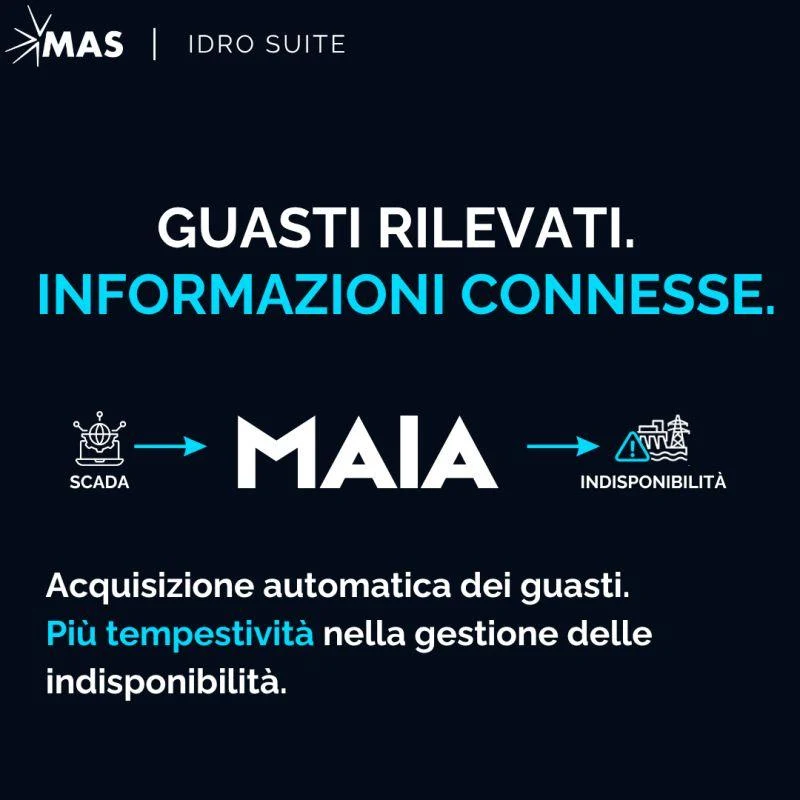
MAIA automatically acquires faults from SCADA systems and turns them into managed unavailability, with a single view for operators and managers. Detecting a fault is the first step; managing the information that follows straight away is the next.
Why timeliness matters in unavailability management
An unavailability is not just a plant outage. It means coordinating maintenance, production, communications and economic impacts, often in real time. When reports travel by email, phone calls and spreadsheets, delays translate into out-of-date production schedules and late communications to the grid operator.
How SCADA integration works
With MAIA, the module of IDRO Suite dedicated to unavailability and maintenance, fault reports are acquired automatically from SCADA systems and integrated into the unavailability management process. The result:
- fewer manual steps between field staff, control room and energy management;
- less fragmented information, because each event lives in a single environment;
- an up-to-date view of plant status and unavailability.
What MAIA manages, beyond faults
- unavailability planned and unplanned in a single web application;
- two-way communication with Terna via AGILE;
- KPIs of availability, production losses and budget impact.
Unavailability automatically updates the IDRO production plan, so the bidding strategy on the markets always starts from the actual state of the plants.
Frequently asked questions
What is MAIA?
MAIA is the IDRO Suite module for unavailability and maintenance: it manages planned and unplanned plant unavailability in real time and reports it to Terna via AGILE.
How are SCADA faults integrated with unavailability?
MAIA automatically acquires fault reports from SCADA systems and feeds them into the unavailability management process, with no manual steps.
What are the benefits of automatic fault acquisition?
Fewer manual steps, less fragmented information and an always up-to-date view of plant status, with availability KPIs and generation losses.
Talk to us
Want to see IDRO at work on your data?
A demo with the people who develop the product, on a case similar to yours. No commitment.