
In its judgment of 3 September 2026 the Court of Justice of the European Union made clear that the Bolkestein Directive does not apply to small hydropower concessions. Producers now have room to plan renewals and plant upgrades, but Italian rules on concessions remain in force.
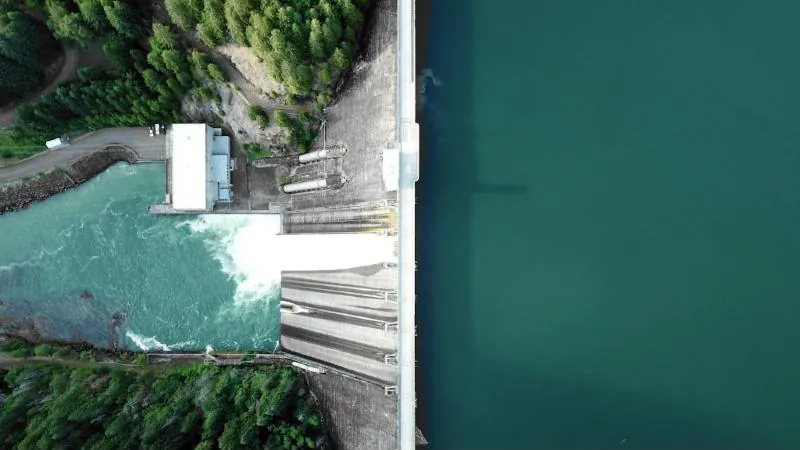
Generating electricity means supplying a good, not providing a service: that is why the Bolkestein Directive does not require tenders for small hydropower concessions. This was established by the Court of Justice of the European Union in its judgment of 3 September 2026 in case C-653/24. It is not, however, a green light for automatic renewal: the requirements and limits set by Italian law still apply, and much will depend on the decisions of the granting authorities.
What the EU Court of Justice decided on small hydropower concessions
The case stems from a law of the Emilia-Romagna Region, Article 3 of Regional Law 17/2023, which lets the holder of a small hydropower concession apply for an extension to align it with the incentive period, within the maximum term of thirty years. The Italian Government challenged it before the Constitutional Court, arguing among other things that the extension amounted to an automatic renewal prohibited by the Services Directive 2006/123/EC. In 2024 the Constitutional Court stayed the proceedings and asked the EU Court whether generating power from a small hydropower plant is a service or the production of a good.
The Court's answer:
- electricity is a good: generating it is not the provision of a service;
- plant operation activities are ancillary and do not change this classification, even when operation is outsourced;
- the public-domain status of the water resource is not decisive;
- as a result the Bolkestein Directive, with its selection-procedure requirement and its ban on automatic renewals, does not apply to plants whose sole or main activity is generating electricity.
This marks a change of course from the positions of the Italian Competition Authority and the Superior Court of Public Waters, which had previously held that the directive also applied to small concessions.
Concession renewal: what is still open
The ruling settles the EU question, not the national one.
- The Royal Decree 1775/1933 still governs concessions: small concessions are those with an average annual nominal capacity of up to 3,000 kW, the maximum term is still thirty years and renewal is only possible if the purposes of the diversion persist and no overriding public-interest reasons stand in the way.
- The case before the Constitutional Court on the Emilia-Romagna law, which also concerns the division of energy powers between the State and the Regions, has yet to conclude.
- The Government has announced work on a framework that protects water resources and regional powers.
In practice, the timing and conditions of renewals will depend on the Regions and the granting authorities. Producers are well advised to approach the authority with solid data on plant performance and planned investment.
Why the ruling matters for plant investment
A clearer concession horizon makes it easier to decide whether to upgrade turbines, generators and civil works. According to Paolo Picco, president of Federidroelettrica, an association of around 200 members, these works can bring increases in expected output of 5-10%, as reported by Il Sole 24 Ore.
But a refurbishment only pays back if three things line up: the remaining term of the concession, the market value of the extra energy and the handling of plant outages during the works.
How to assess the renewal and refurbishment of a hydropower plant
Before applying for a renewal or starting works, these are the questions to answer with numbers:
- How much does the plant produce today, and how much could it produce? You need a reliable history of output, inflows and outages.
- What is the extra energy worth? A MWh generated at peak is not worth the same as one generated at night: the extra output has to be valued hour by hour.
- What does an outage cost? Works require planned outages, to be scheduled in lower-value periods and notified to Terna.
- Which scenario pays off? Works now, after the renewal is granted, or in stages: the options should be compared across price and hydrology scenarios.
IDRO Suite tools for producers and traders
- Scenarios before deciding. With the what-if analyses in IDRO Optimizer you compare price and inflow scenarios and assess the effect of works on output, including ahead of a concession renewal.
- Getting value from the extra energy. IDRO calculates the entry price hour by hour and builds bids on MGP and MI within reservoir levels, minimum flows and concession obligations: we covered this in how to get value from hydropower.
- Managing the works. With MAIA outages due to works are planned, notified to Terna and update the generation plan straight away; with THESEUS you simulate the effect of works on the hydraulic network in advance.
- For those who buy power from many small producers. With the producer portal THOR traders and balancing responsible parties collect updated master data, generation schedules and outages of upgraded plants in a standard format, all the way to invoicing requests.
IDRO Suite today manages over 3,000 MW of installed capacity. To go deeper into the method, read the guide on how to optimise a hydropower plant.
Sources: Court of Justice of the European Union, judgment of 3 September 2026, case C-653/24; Italian Constitutional Court, press release of 7 October 2024 on the preliminary reference; Il Sole 24 Ore for the Federidroelettrica statement. This article is for information only and is not legal advice.
Frequently asked questions
Does the Bolkestein Directive apply to small hydropower concessions?
No. In its judgment of 3 September 2026 (case C-653/24) the Court of Justice of the European Union made clear that generating electricity means supplying a good, not providing a service: Directive 2006/123/EC therefore does not apply to plants whose sole or main activity is generating electricity, such as small hydropower plants.
What are small hydropower concessions (piccole derivazioni)?
Under Royal Decree 1775/1933 they are public-water concessions for hydropower with an average annual nominal capacity of up to 3,000 kW. Above this threshold they are large concessions. A small concession lasts thirty years at most.
After the ruling, are small hydropower concessions renewed automatically?
No. The tender obligation that would have followed from the Bolkestein Directive falls away, but renewal is still governed by Italian law: the purposes of the water diversion must persist and no overriding public-interest reasons must stand in the way, as assessed by the granting authority.
How much can a plant upgrade increase expected output?
It depends on the plant. According to Federidroelettrica, investment in turbines, generators and equipment can raise expected output by 5-10%. To know whether the investment pays back, you also need to assess the market value of the extra energy and the cost of outages during the works.
How do you assess a refurbishment investment ahead of a concession renewal?
By comparing scenarios: remaining concession term, expected output before and after the works, price and inflow scenarios, and plant outages during construction. Optimisation software such as IDRO Optimizer lets you simulate these scenarios with what-if analyses before deciding.
Talk to us
Want to see IDRO at work on your data?
A demo with the people who develop the product, on a case similar to yours. No commitment.