
Horizon, the European Commission's research and innovation magazine, has published an article on Di-Hydro, the European project that brought digital twins, AI-based forecasting and new sensors into hydropower plants. Among the leading interviewees is Nicola Crippa, product manager for MAS's hydropower optimisation software.
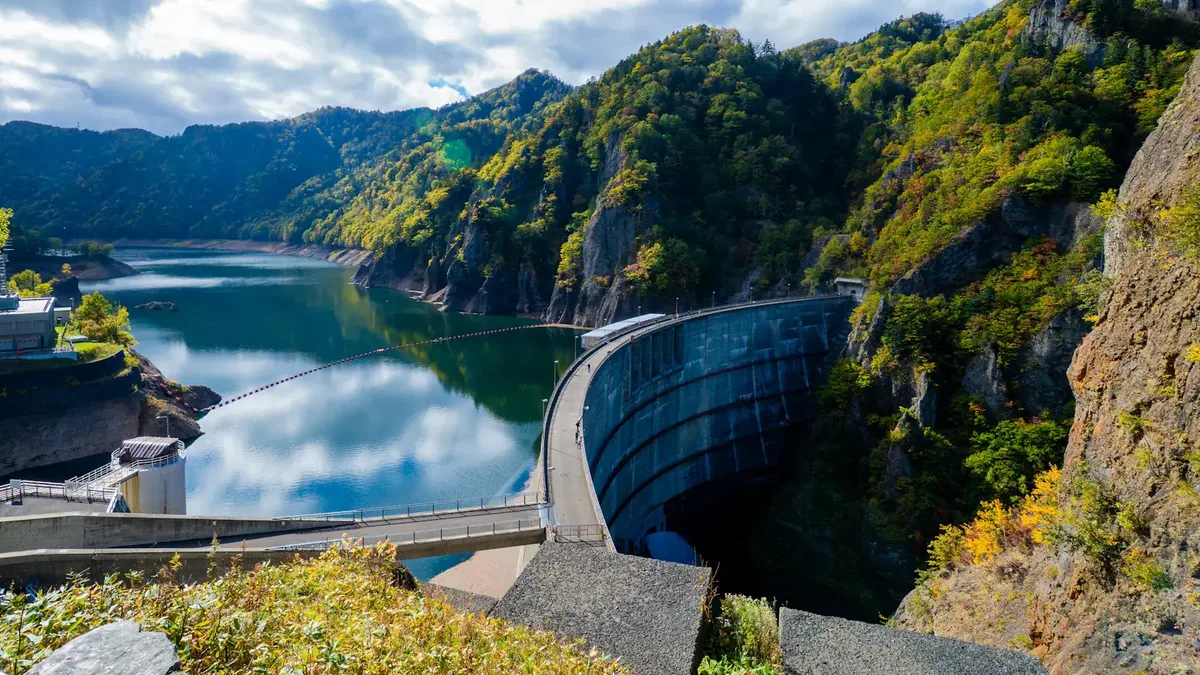
Horizon Magazine, the European Commission's research and innovation magazine, has featured Di-Hydro: the European project that brought digital twins, forecasting models and new sensors into hydropower plants, to generate energy when it is needed without losing sight of rivers and ecosystems. Among the leading interviewees is Nicola Crippa, product manager for MAS Consulting's hydropower optimisation software, alongside the project coordinator, Alkiviadis Tromaras of CERTH.
Why hydropower is back in focus
The article, published on 27 October 2026, starts from one figure: in 2025 hydropower was the European Union's third-largest source of renewable electricity, after wind and solar, at 25.9% of renewable generation according to Eurostat. Its value goes beyond the numbers, though: plants with reservoirs can hold water back and use it when wind and solar fall short, which makes them a form of storage for the whole power system.
It is precisely this flexibility that makes operation harder. Plants must comply with EU rules on wildlife, waterways and water quality, and climate change is altering rainfall and snowmelt patterns, with greater risk of drought and floods.
Not how much water, but when it arrives
In the interview Nicola Crippa turns to a point anyone who runs a reservoir knows well: the volume of water available in a year may stay much the same, but the way it is spread across the seasons is changing. That makes accurate forecasting decisive: it helps operators choose when to generate and when to save water, so they produce energy when it is needed most, such as during peak demand hours.
This is the same principle behind hydropower optimisation: every cubic metre turbined today will not be available tomorrow, so the value of water depends on when it is used. We covered this in depth in our guide on how to optimise a hydropower plant.
Rehearse decisions before making them
At the heart of Di-Hydro is the digital twin: a digital replica of the plant, fed with real data, on which different scenarios can be run with no risk to the real plant. Around the digital twin the project built an AI and machine-learning decision-support platform that brings together energy generation, water management and environmental constraints.
As Tromaras points out in the article, these tools do not replace operators: they help them decide with better information. In testing, the platform pointed to more efficient operating choices while taking environmental constraints and regulations into account.
Sensors: the plant as infrastructure and as an ecosystem
The second strand concerns field measurements, on two fronts:
- water quality: dissolved oxygen, pH, conductivity, temperature, ammonia, algae and E. coli, measured upstream and downstream and cross-checked with historical data. Unusual changes act as an early warning of what is shifting in the reservoir;
- machinery: wireless sensors that detect acoustic emissions, vibration, pressure and temperature, to spot wear and damage before they turn into failures.
The result is a view of the plant that brings together its mechanical and environmental sides. The project's use cases are in Greece, Italy and Serbia.
A Europe moving at different speeds
The sharpest point in the interview concerns the starting line. Europe's plants were built in different eras with different technologies, and how digitised they are varies widely from country to country and from operator to operator. “The digitisation level across Europe is very different”, Crippa notes. Bringing these systems to a common standard will take significant work, but in Crippa's view there is no way around it.
For hydropower operators this means the problem is not only technological. The data often already exists, in SCADA systems, metering systems and spreadsheets: the challenge is to connect it to generation and market decisions.
MAS's contribution to Di-Hydro
MAS Consulting is one of the project's 13 partners, alongside research centres, technology companies and three power producers: PPC in Greece, A2A in Italy and EPS in Serbia. Di-Hydro, funded by the Horizon Europe programme with an EU contribution of about €4.5 million, started in October 2023 with the kick-off at CERTH in Thessaloniki and ended in September 2026.
In the project MAS worked on modelling hydro cascades and on optimisation algorithms. The starting point was IDRO Optimizer, which plans the generation of entire hydro cascades within the constraints of reservoirs, plants and conduits; the challenge was to add new objectives and constraints, such as environmental and water-quality ones.
From research to real plants
Many of Di-Hydro's themes are already part of the daily work of producers using IDRO Suite:
- scenarios and what-if analysis to assess the effect of a choice in advance, with optimisation algorithms that can also be stochastic;
- field data connected to decisions: with MAIA faults arrive automatically from SCADA systems and update the generation plan;
- simulation of interventions on the hydraulic network with THESEUS, before going out into the field.
IDRO Suite today manages over 3,000 MW of installed capacity. Di-Hydro, with its environmental data and new constraints, is a testing ground for evolving these tools towards hydropower that is more digital, more flexible and more attentive to the local environment.
The full article, in English, is on Horizon Magazine. To find out more about the project: dihydro-project.eu and the CORDIS project page.
Frequently asked questions
What is Horizon Magazine?
It is the online research and innovation magazine published on behalf of the European Commission. It tells the story of projects funded by EU programmes, such as Horizon Europe, through the people who work on them.
What is the Di-Hydro project?
Di-Hydro is a research and innovation project funded by Horizon Europe, running from October 2023 to September 2026 and coordinated by CERTH in Thessaloniki. It developed sensors, forecasting models, digital twins and a decision-support platform for hydropower plants, with use cases in Greece, Italy and Serbia.
What is a digital twin used for in a hydropower plant?
A digital twin is a digital replica of the plant fed with real data. It lets operators simulate different scenarios, for example inflows, prices or environmental constraints, and assess their effects before making a decision in the field, without risk.
Why does climate change make hydropower harder to manage?
Because it changes rainfall and snowmelt patterns: the amount of water over a year may stay similar, but it arrives at different times, with greater risk of drought and floods. More accurate forecasts are needed to decide when to generate and when to save water.
What was MAS Consulting's role in Di-Hydro?
MAS Consulting is one of the project's 13 partners. It worked on modelling hydro cascades and on optimisation algorithms, building on its experience with IDRO and adding new constraints, such as environmental and water-quality ones.
Talk to us
Want to see IDRO at work on your data?
A demo with the people who develop the product, on a case similar to yours. No commitment.